ISSUE NO. 10 – PERMISSION TO STOP
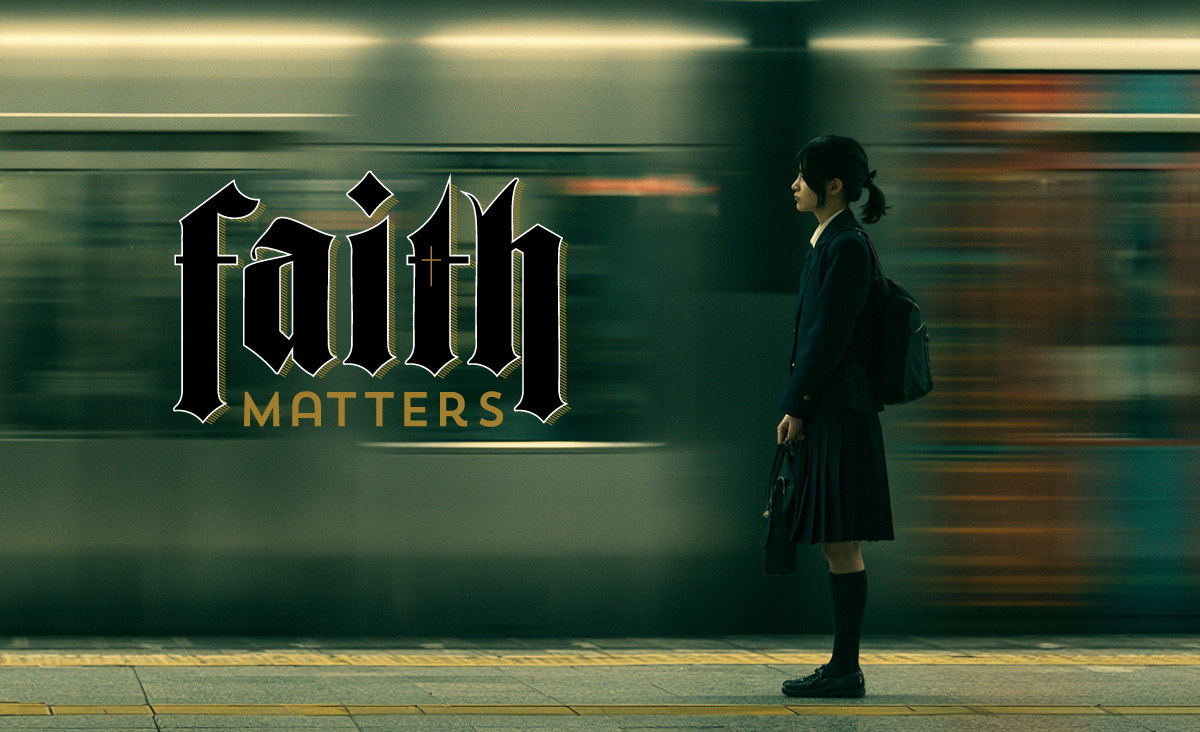
A person stands still beside a blurred passing train, with the Faith Matters logo
 
A Publication of Ave Maria Mutual Funds


the LENS


Modern life rewards motion: the next task, the next achievement, the next notification. Even rest is often justified by what it will help us accomplish afterward. We pause only so that we can return to work more efficiently.

Sunday interrupts that logic. God does not ask us to prove our worth through constant usefulness. He gives us a day to worship, receive, delight, and rest. To stop is not to abandon responsibility. It is to remember that our lives are received before they are managed, and that we belong to God before we accomplish anything at all.

Sunday is therefore more than recovery from the week behind us. It restores the proper order of things: God acts first, and we receive.


Treasury
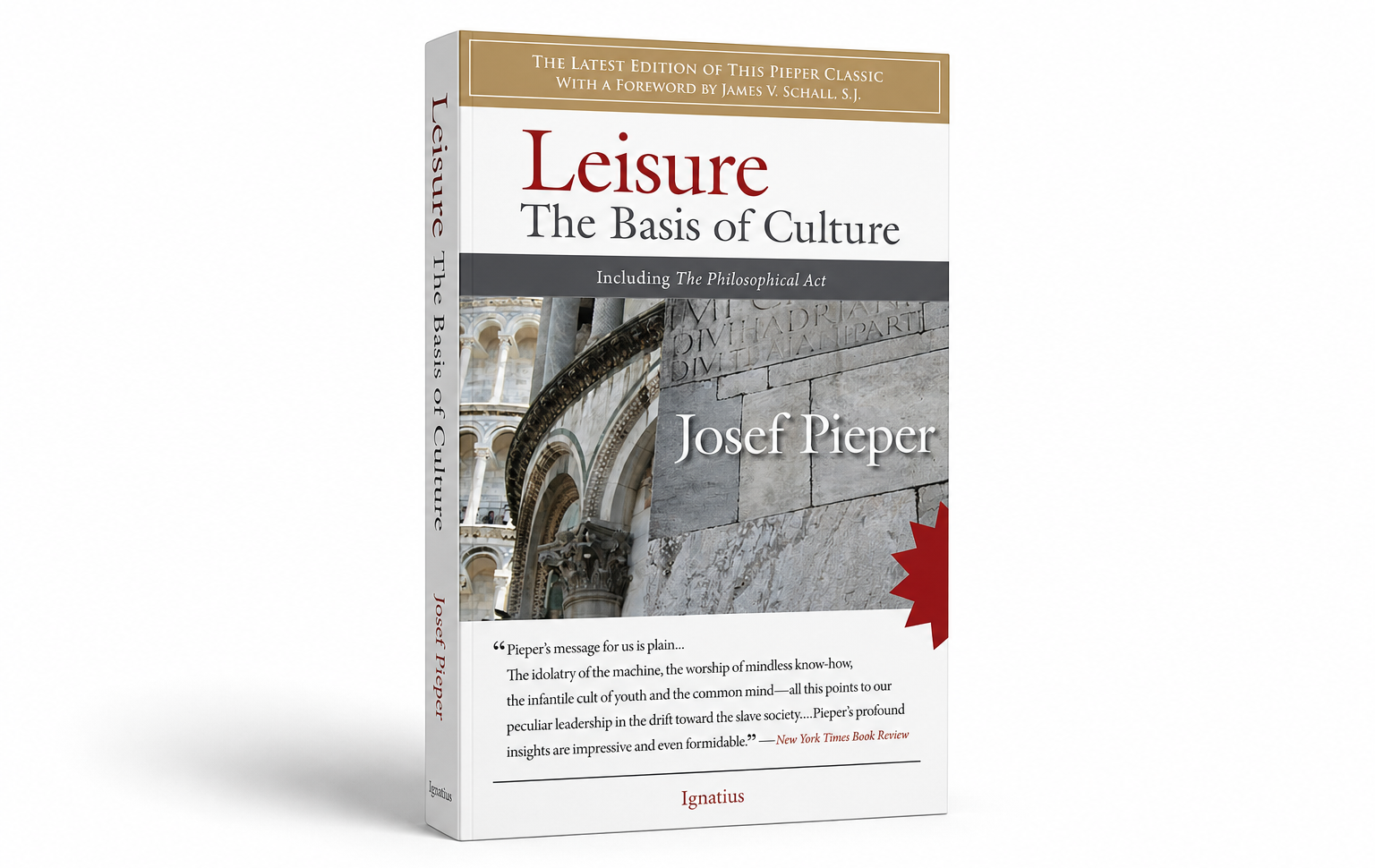
Leisure: The Basis of Culture by Josef Pieper book
 
Leisure Is Not Idleness
 

Josef Pieper (1904–1997) was a German Catholic philosopher whose work helped renew twentieth-century engagement with St. Thomas Aquinas. He wrote extensively about the cardinal virtues, the human person, contemplation, and the relationship between faith and culture, and taught philosophy at the University of Münster for decades.

In Leisure: The Basis of Culture, Pieper challenges what he calls the world of “total work” — a culture in which usefulness, effort, and productivity become the measure of the person. Work is necessary and good, but the human person is more than a worker, a function, or a producer.

For Pieper, leisure is not idleness, entertainment, or time spent recovering so that we can work again. It is an attitude of receptive attention: the capacity to become still before reality and receive truth, beauty, creation, and life as gifts.

Leisure reaches its fullest expression not in escape, but in celebration, feast, and cultus — divine worship. Without that connection to worship, leisure can collapse into distraction or consumption. With it, leisure becomes an affirmation that the world is good because it comes from God.

That is why we will never understand work correctly until we understand leisure. We are made to labor, but we are not made only to labor.

Other notable works: The Four Cardinal Virtues and Guide to Thomas Aquinas.


in the FRAY


When Stopping Feels Irresponsible
 
An empty chair beside a desk in a quiet, sunlit room
The difficulty is not usually knowing that rest is good. It is tolerating what happens when activity ends.
 

There is always unfinished work, another household task, a message to answer, or something that could be improved. Constant activity can feel like responsibility, while stopping can feel indulgent. Yet beneath that discomfort is a harder truth: the world continues without our constant management.

Sunday does not condemn work. It places a boundary around work so that work does not claim the whole person. The command to rest asks us to surrender, for a time, the illusion that everything depends on our effort.

The practical question is not simply, “What am I forbidden to do?” It is, “What kind of day makes worship, joy, mercy, family life, and genuine rest possible?” Sunday will look different across families and seasons of life, but it should remain recognizably different.

“The institution of the Lord’s Day helps everyone enjoy adequate rest and leisure to cultivate their familial, cultural, social, and religious lives.”
Catechism of the Catholic Church, 2184

We stop not because everything is finished, but because everything does not depend on us.


VIRTUE of the MONTH


Temperance
 

Temperance is the capacity for self-mastery, the daily challenge of not letting oneself be overcome by passions and appetites; establishing order in the chaos of the human heart.


“A man without self-control is like a city broken into and left without walls.”
 
 
Proverbs 25:28


Did you find this issue meaningful?
 
YES A LITTLE NOT THIS TIME


Ave Maria Mutual Funds
 
1-866-AVE-MARIA (1-866-283-6274)
avemariafunds.com
 
WEBSITE


Was this issue forwarded to you?
 
If you’re not already subscribed, sign up to receive future issues of Faith Matters.
 
SUBSCRIBE
 
To unsubscribe from Faith Matters emails, use the unsubscribe link included in the email you received.


Schwartz Investment Counsel, Inc., a registered investment adviser established in 1980, serves as investment adviser for Ave Maria Mutual Funds. The Adviser invests in securities only if they meet the Funds’ investment and religious requirements, and as such, the returns may be lower or higher than if the Adviser made decisions based solely on investment considerations. The Funds’ method of security selection may or may not be successful and the Funds may underperform or outperform the stock market as a whole. All mutual funds are subject to market risk, including possible loss of principal.

Request a prospectus, which includes investment objectives, risks, fees, expenses and other information that you should read and consider carefully before investing. The prospectus can be obtained by calling 1-866-283-6274 or it can be viewed and downloaded here. Distributed by Ultimus Fund Distributors, LLC. Schwartz Investment Counsel, Inc. is not affiliated with Ultimus Fund Distributors, LLC.

 
20260803-5803360