ISSUE NO. 19 – THE PRAYER THAT WINS BATTLES
Faith Matters with illustrated Rosary beads and crucifixes
 
A Publication of Ave Maria Mutual Funds


the LENS


Considered one of the most beautiful and enduring of Catholic prayers, the Rosary has been encouraged by countless saints as a means of deepening faith, drawing us closer to Christ, and bringing us into the company of His Mother. It is at once simple and meditative, familiar and profound, and it can be prayed almost anywhere – a church, a car, a hospital room, beside a child's bed, or in the quiet of home.

Today we have countless Rosary apps and an almost endless variety of beads, strings, sizes, and shapes. Yet for all its variety, the Rosary remains one of the most recognizable expressions of Catholic faith and prayer, simple enough for a child and deep enough to sustain a lifetime.


Roots of Tradition
 
The Many Names of Our Lady
 

Catholics have given the Blessed Virgin Mary countless titles over the centuries, each reflecting a particular aspect of her relationship to Christ and the Church or a place, feast, devotion, or moment in Christian history. Here are just a few:

Our Lady of Victory – Associated with the Christian victory at Lepanto in 1571 and the feast established by Pope St. Pius V.

Our Lady of Mount Carmel – Associated with the Carmelite tradition and especially with the Brown Scapular; her feast is celebrated July 16.

Our Lady of Guadalupe – The title associated with Mary's appearances to St. Juan Diego at Tepeyac in Mexico in 1531 and the famous image preserved there.

Our Lady of Lourdes – Associated with Mary's appearances to St. Bernadette Soubirous in Lourdes, France, in 1858.

Our Lady of the Snows – Traditionally associated with the dedication of Rome's Basilica of St. Mary Major and the ancient tradition of a miraculous snowfall marking the site.

Our Lady of Perpetual Help – Associated with the Byzantine-style icon venerated in Rome and subsequently throughout the Catholic world.

Our Lady of Good Counsel – Associated with the Augustinian shrine and revered image at Genazzano, Italy.

Our Lady, Help of Christians – A Marian title that became especially associated with St. John Bosco and the Salesian tradition.

Our Lady of Sorrows – A title reflecting Mary's participation in the suffering of Christ, particularly her sorrows during His Passion.

Our Lady of Loreto – Associated with the Holy House of Loreto in Italy, long venerated as a place connected with the home of the Holy Family.

Our Lady of Czestochowa – Associated with the famous icon of the Blessed Virgin venerated at the Jasna Góra monastery in Poland.

Our Lady of the Miraculous Medal – Associated with Mary's appearances to St. Catherine Labouré in Paris in 1830 and the medal that followed.

These titles reflect how Catholics have encountered the Blessed Virgin Mary, honored her, and sought her intercession in different places and circumstances. Our Lady of Lourdes, Our Lady of Guadalupe, Our Lady of Mount Carmel, and Our Lady of Victory are all the same Mary.


in the FRAY


The Battle of Lepanto
 
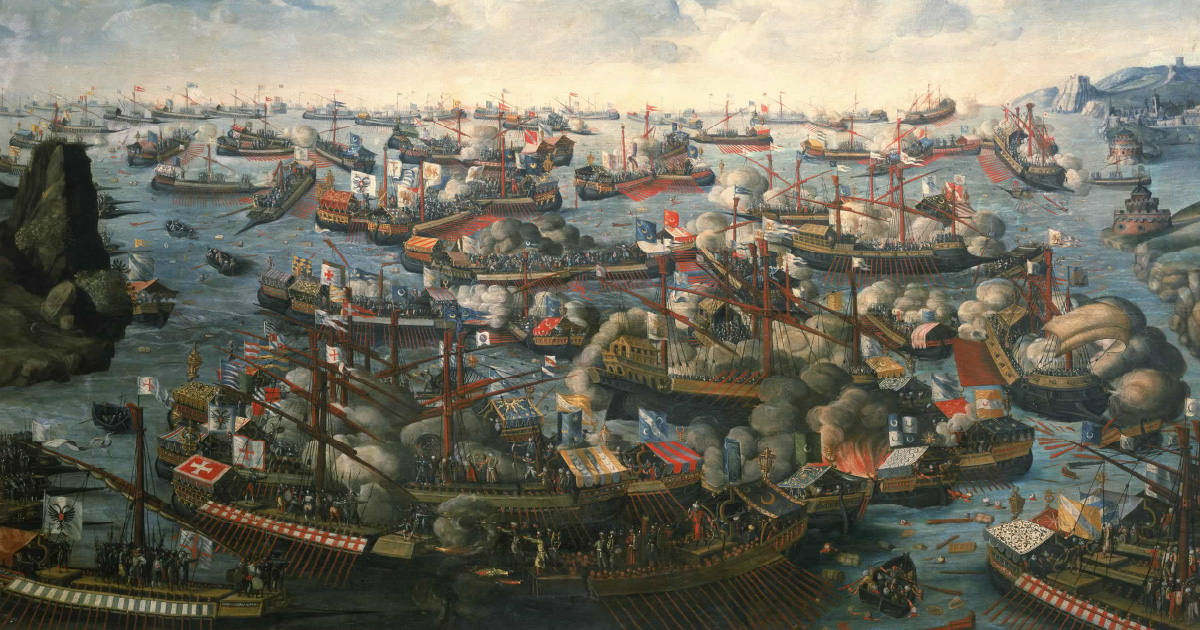
Painting of galleys in battle amid cannon smoke
Pope St. Pius V called on Catholics to pray the Rosary as a Christian fleet prepared for battle. The victory at Lepanto would leave a lasting mark on Catholic devotion.
 

On October 7, 1571, two naval fleets met near Lepanto, at the entrance to the Gulf of Patras. On one side was the Ottoman fleet, representing a powerful Muslim empire that had steadily expanded into Christian lands. Constantinople had fallen in 1453, Ottoman forces had pushed deep into southeastern Europe, and their control of the eastern Mediterranean posed a growing threat to the Christian powers of the West. On the other side was the Holy League, a coalition of ships from Spain, Venice, Genoa, the Papal States, and others, commanded by Don Juan of Austria.

Pope St. Pius V believed the battle would not be decided by ships and weapons alone. As preparations were underway, he called Catholics throughout Europe to pray the Rosary and placed the Christian fleet under the protection of the Blessed Virgin Mary. Rosaries were prayed aboard the ships, and the soldiers and sailors were called to confession and the sacraments as they prepared for battle.

The fighting began around midday and continued into the afternoon. The Holy League defeated the Ottoman fleet in what became one of the most consequential naval battles of the 16th century. Thousands of Christian galley slaves were also freed. For Catholics at the time, the victory was understood not simply as a military achievement, but as an answer to prayer and the intercession of the Blessed Virgin.

Pius V had already been promoting the Rosary. In 1569, his apostolic constitution Consueverunt Romani Pontifices helped establish the form of the devotion that Catholics recognize today. After Lepanto, he ordered a feast honoring Our Lady of Victory. His successor, Pope Gregory XIII, later dedicated the feast under the title of the Holy Rosary.

The connection between Lepanto and the Rosary is therefore more than a story about a battle. It is part of the reason millions of Catholics continue to pray the Rosary – and why the Church remembers October 7 not only as a military victory, but as a day of thanksgiving for God's protection and Mary's intercession.

The battle was fought with galleys and cannon, but the weapon Pope Pius V placed in the hands of ordinary Catholics was much simpler: a string of beads and a call to pray.

The Battle of Lepanto, 7 October 1571, signed "H Letter" (late 16th century). Oil on canvas, National Maritime Museum, Greenwich, London, Caird Fund.


VIRTUE of the MONTH


Prudence
 

Prudence helps us see everyday decisions in light of eternity. It is the virtue that helps us recognize what is truly good – and then choose the right way to pursue it.


“So teach us to number our days that we may get a heart of wisdom.”
 
 
Psalm 90:12


Did you find this issue meaningful?
 
YES A LITTLE NOT THIS TIME
 
Share this issue:
 
Facebook


Ave Maria Mutual Funds
 
1-866-AVE-MARIA (1-866-283-6274)
avemariafunds.com
 
WEBSITE


Was this issue forwarded to you?
 
If you’re not already subscribed, sign up to receive future issues of Faith Matters.
 
SUBSCRIBE
 
To unsubscribe from Faith Matters emails, use the unsubscribe link included in the email you received.


Schwartz Investment Counsel, Inc., a registered investment adviser established in 1980, serves as investment adviser for Ave Maria Mutual Funds. The Adviser invests in securities only if they meet the Funds’ investment and religious requirements, and as such, the returns may be lower or higher than if the Adviser made decisions based solely on investment considerations. The Funds’ method of security selection may or may not be successful and the Funds may underperform or outperform the stock market as a whole. All mutual funds are subject to market risk, including possible loss of principal.

Request a prospectus, which includes investment objectives, risks, fees, expenses and other information that you should read and consider carefully before investing. The prospectus can be obtained by calling 1-866-283-6274 or it can be viewed and downloaded here. Distributed by Ultimus Fund Distributors, LLC. Schwartz Investment Counsel, Inc. is not affiliated with Ultimus Fund Distributors, LLC.

 
20261006-5985425