
A Pilgrimage of Faith and Renewal
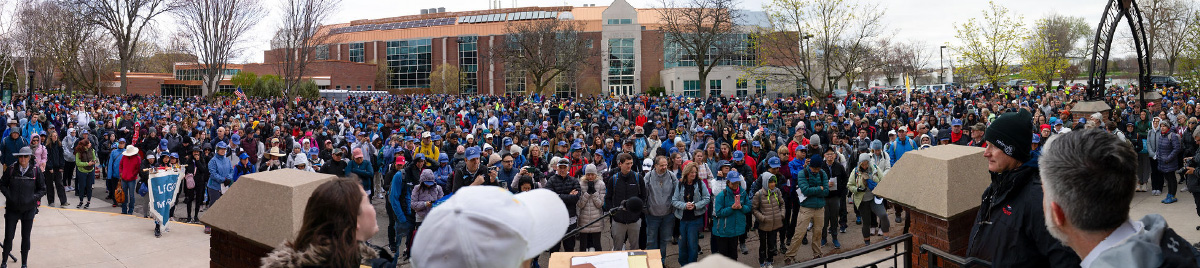
Inside the Walk to Mary, the largest Catholic pilgrimage in the United States.
Some carry rosaries. Some carry intentions. Some carry things they haven’t told anyone. That is what it looks like when tens of thousands of Catholics line up before dawn to walk 22 miles through northeastern Wisconsin to a shrine most of them had never heard of before someone invited them.
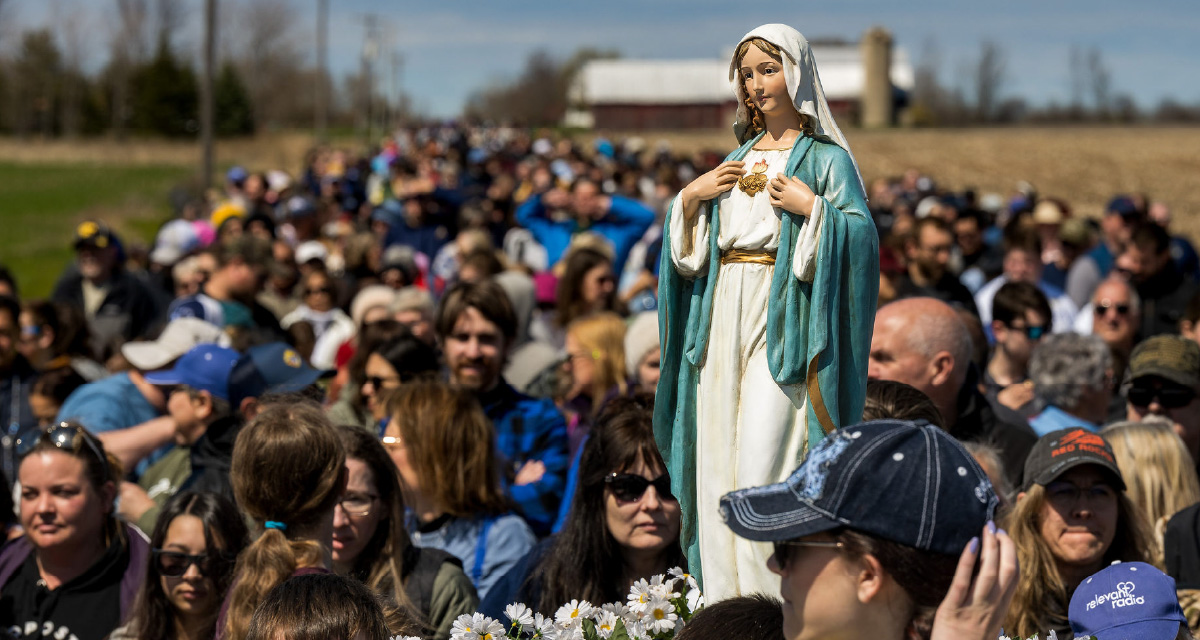
The destination is the National Shrine of Our Lady of Champion, near Green Bay, the only site in the United States where the Catholic Church has formally approved a Marian apparition. Mary appeared to Adele Brice here in 1859. The Church granted its approval in 2010, and one year later, the Walk to Mary began. Pilgrims are not walking toward a scenic landmark or a regional community event. They are walking toward something the Church has recognized as holy ground, a designation that carries weight because it is rare and because the Church does not grant it easily.
The question worth asking is not how many come, but why they keep returning.
What happens on that ground is harder to measure than attendance.
“We have countless stories,” said Pat Deprey, who co-founded the walk in 2011 alongside Tom Schmit. “Family issues resolved, marital problems overcome, prayers answered.” A single woman from Chicago, looking for a spouse, came at the urging of friends and met a man, also from Chicago, during the walk. They walked together that year. “They were married on the day of the walk the following year,” Deprey said. “Then the next year they returned and she was pregnant.” Then there is the woman from California, who traveled to walk and to visit the shrine, and whose cancer, after she returned home, was gone. Doctors had no explanation. She has come back several times since, in gratitude, not because she was asked to. “These are answered prayers,” Deprey said carefully. “It would be premature to call them miracles.” Deprey is careful with his words. After more than a decade of hearing stories like these, he still resists drawing conclusions that go beyond what he knows. But those stories point to a deeper question: what led him to dedicate so much of his life to this pilgrimage?
To understand that, you have to know where he started. Deprey describes himself as a cradle Catholic who spent most of his adult life present but not fully there, obedient to the forms of the faith without grasping its depth. “I was doing the things I was supposed to because I wanted to be a good Catholic,” he said, “but I didn’t really understand the complexity of the faith.” That changed on a pilgrimage to Medjugorje. “There were signs presented to me through Mary,” he said. “I was open to those graces, and then the curiosity and intensity took over.” Later pilgrimages to other Marian apparition sites, including Lourdes and Fatima, deepened that commitment. From that point forward, his faith took on a new seriousness: a deeper commitment to prayer, the sacraments, and learning more about the faith he had inherited. He attends daily Mass now because he wants to be there. “It feels like something is missing if I don’t receive the Eucharist daily.” Every morning he prays the Rosary, then a Memorare before Mass. He and his wife helped their parish start a daily Rosary before Mass; they are now working with the parish toward an Adoration chapel. That commitment continues today.
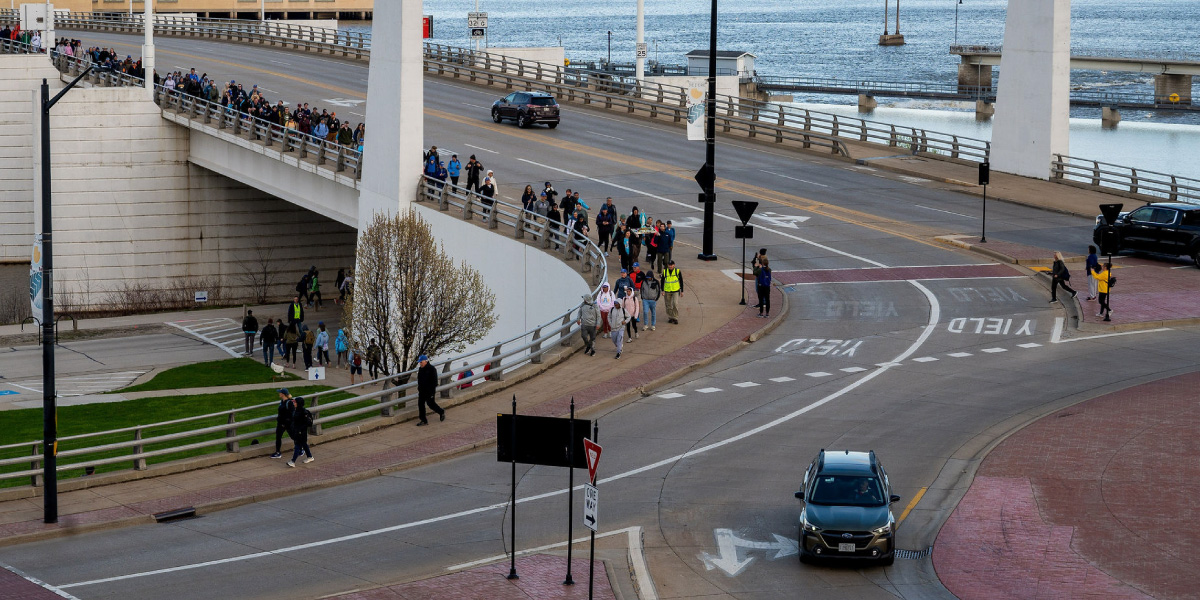
The logistics of what Deprey and Schmit started have grown into something that would test anyone’s composure. The walk begins and ends in different locations. Thousands of participants require buses, parking, volunteers, and hotel rooms in a region that keeps running short of them. Discover Green Bay is now a formal partner—they manage hotel accommodations for most pilgrims coming into town and named the Walk to Mary their Event of the Year in 2025, ahead of the NFL Draft hosted by the Green Bay Packers, an honor that reflects both the event’s scale and the economic force it has become for the region. Discussions are underway with the Packers about using team facilities for parking. The route has a four-lane highway crossing that walkers are currently shuttled across. Fr. Rocky, CEO of Relevant Radio, had the idea to build a bridge over it instead, and that idea has advanced from concept to engineering: the DOT is on board, engineers and village officials are supportive, the land has been identified, and the Department of Tourism in Madison is aware. “It has the potential to really expand the event,” Deprey said. Deprey admits he is a worrier. The demands of organizing an event of this size can be overwhelming at times, but he says the experience has repeatedly taught him the importance of trusting God with what remains outside his control.
Shorter routes have opened the pilgrimage to those who cannot manage 22 miles. The 1.7-mile Walk with the Children stays entirely on the shrine grounds; in 2025, it drew more than 1,000 participants on its own. The elderly and those with physical limitations have embraced it, and organizers expect that dimension of the event to keep growing. This year brought a major mailing campaign to Catholic schools throughout Wisconsin, an effort to build awareness among younger people and students before they are old enough for the full route. Women make up roughly 65% of walkers, a ratio that has held steady for a decade; organizers have worked deliberately to grow male participation and continue to do so. Deprey and Schmit met only because Relevant Radio connected two strangers who had independently called the same station on the same day about a potential walking pilgrimage. “We are co-founders and have been best of friends since,” Deprey said. “We have different skill sets. I head up the event, and Tom focuses on specific aspects and is very supportive overall.” Neither of them anticipated the scale of what they were starting.
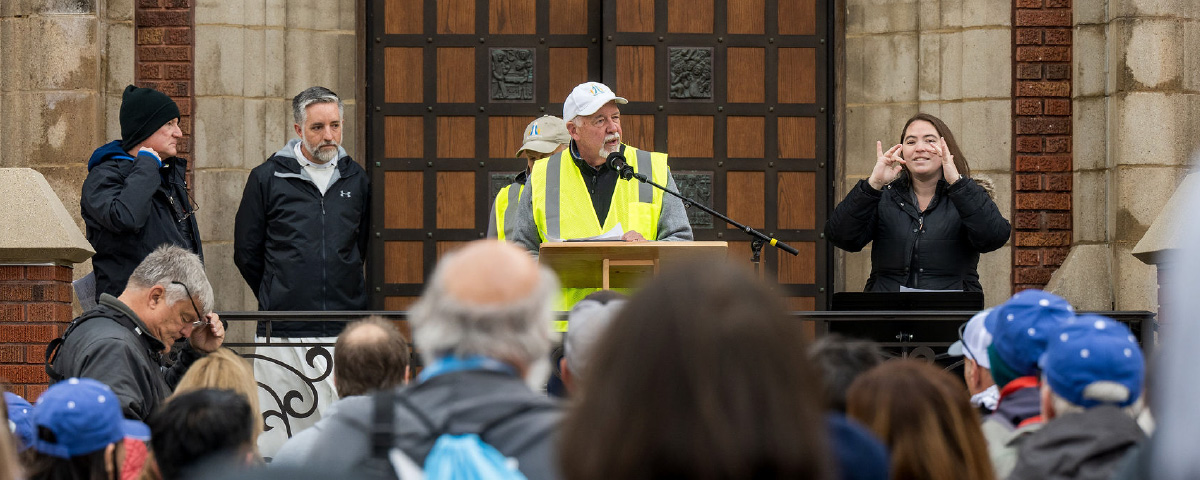
For anyone considering 2027, the advice from the man who built it is unadorned: bring prayer intentions, bring your favorite rosary, and plan to just offer it up. The website carries what pilgrims need to know about logistics. The deeper purpose of the pilgrimage, Deprey says, is something each person discovers along the way.
Year after year, that discovery is what keeps thousands of pilgrims returning.
 Website