Faith Matters
 
A Publication of Ave Maria Mutual Funds


the LENS


“The magnanimous person seeks great things worthy of honor.” Thomas Aquinas wrote that long before our founders lived it – they believed rights came from God, not government. Our forefathers recognized both freedom and responsibility; that freedom is not merely the ability to choose, it is the opportunity to pursue what is noble and that citizenship begins with fidelity to God.


Treasury
 
Archbishop John Carroll’s Prayer
 

In 1791, Carroll wrote a prayer asking God to guide the nation. More than two centuries later, his petitions for virtue, religion, justice, and liberty are still relevant. As we celebrate Independence Day, Archbishop Carroll reminds us that freedom flourishes when rooted in virtue, wisdom, and gratitude to God.

PRAYER
 
 
Michael Heyeck
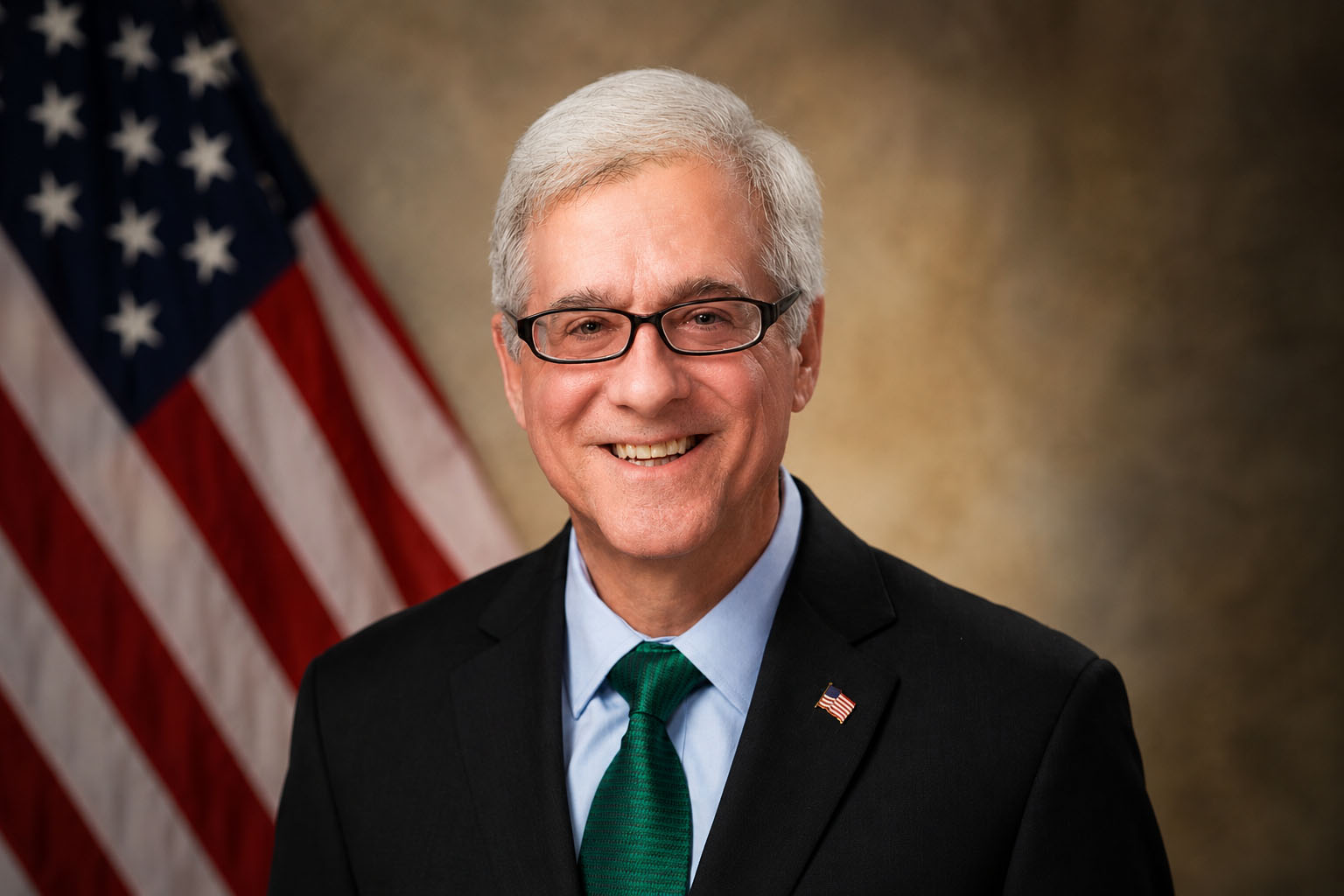
Michael Heyeck: engineer, former City Councilman and author
 
A Catholic in the Public Square
 

Michael Heyeck reflects on over thirty years of public service, the Common Good, and bringing faith into everyday life. He was told directly, at a council meeting, to leave his faith at home. He did not. In this interview, he shares how faith shaped his public service, inspired his book, and led him to a deeper understanding of vocation and purpose.

INTERVIEW


in the FRAY


The Carrolls of Maryland
 
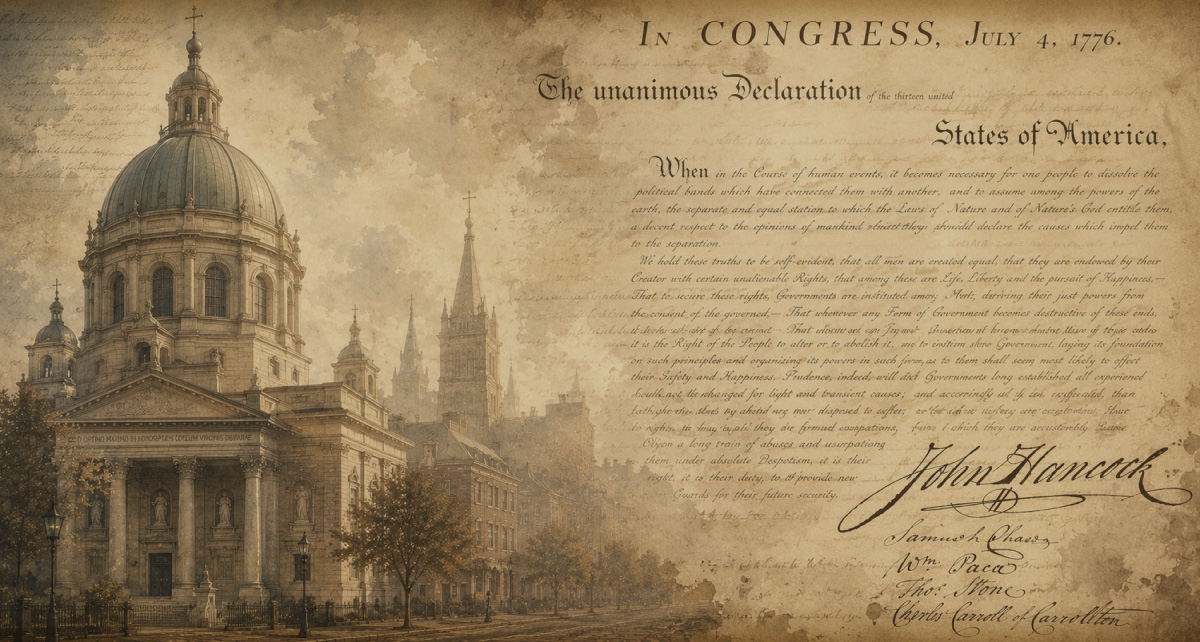
Declaration of Independence and Charles Carroll of Carrollton signature with historic Maryland architecture
One family helped shape both the American republic and the Catholic Church in the United States.
 

How many Catholics signed the Declaration of Independence? One: Charles Carroll of Carrollton. But the story of Catholic influence in America’s founding does not end with his signature.

The Catholic Carroll family of Maryland left an extraordinary mark on the nation’s early history. While Charles helped secure American independence, Daniel Carroll helped establish the new government, and Daniel’s brother, John Carroll, laid the foundation for the Catholic Church in the United States.

The irony of Charles Carroll’s contribution is this: he was legally barred from entering politics, practicing law, or even voting. As a Roman Catholic in colonial Maryland, the law stood against him. He stepped forward anyway. When he signed the Declaration of Independence, he was among the wealthiest men in the colonies – Maryland’s largest landowner – which meant he had more to lose than almost any other man in the room. He knew it. He signed.

He died in 1832 at ninety-five years old, the last surviving signer of the Declaration of Independence. By then, the legal barriers that had once excluded Catholics from public life in Maryland had largely disappeared, and the Church his family had long sustained was firmly established in the young nation.

Daniel Carroll also played a vital role in the nation’s founding. One of only five men to sign both the Articles of Confederation and the United States Constitution, he helped shape the framework of the new federal government. Like Charles, he carried his Catholic faith into public service during a time when Catholics remained a small and often distrusted minority.

John Carroll’s work was quieter in its form and permanent in its reach. America’s first bishop and later its first archbishop, he founded Georgetown University and established the nation’s first seminary. He led the effort to build a cathedral in Baltimore designed on American principles of architecture. The Baltimore Basilica, completed after his death in 1815, stands today as a Minor Basilica, a national historic landmark, and a national shrine. The Baltimore Catechism, published decades after his passing, was among the many fruits of the ecclesiastical structure he built from the ground up.

Members of the same Catholic Carroll family, shaped by the Jesuit tradition, each answered a different calling. Charles risked everything to help win American independence. Daniel helped build the nation’s constitutional government. John helped build the Church that would serve generations of American Catholics.

They were called to greater things than the law permitted and the age expected. Each answered.


VIRTUE of the MONTH


Fortitude
 

Very few people are called to a martyr’s death, but all of us are called daily to lay down our lives—to live with and for Him. In what small way is Christ inviting you to die to yourself—this week—for the good of someone else?


“Greater love has no man than this, that a man lay down his life for his friends.”
 
 
John 15:13


Ave Maria Mutual Funds
 
1-866-AVE-MARIA (1-866-283-6274)
avemariafunds.com
WEBSITE
 
 
Was this issue forwarded to you?
 
If you’re not already subscribed, sign up to receive future issues of Faith Matters.
SUBSCRIBE
To unsubscribe from Faith Matters emails, use the unsubscribe link included in the email you received.


Schwartz Investment Counsel, Inc., a registered investment adviser established in 1980, serves as investment adviser for Ave Maria Mutual Funds. The Adviser invests in securities only if they meet the Funds’ investment and religious requirements, and as such, the returns may be lower or higher than if the Adviser made decisions based solely on investment considerations. The Funds’ method of security selection may or may not be successful and the Funds may underperform or outperform the stock market as a whole. All mutual funds are subject to market risk, including possible loss of principal.

Request a prospectus, which includes investment objectives, risks, fees, expenses and other information that you should read and consider carefully before investing. The prospectus can be obtained by calling 1-866-283-6274 or it can be viewed and downloaded here. Distributed by Ultimus Fund Distributors, LLC. Schwartz Investment Counsel, Inc. is not affiliated with Ultimus Fund Distributors, LLC.

 
20260629-5696296